


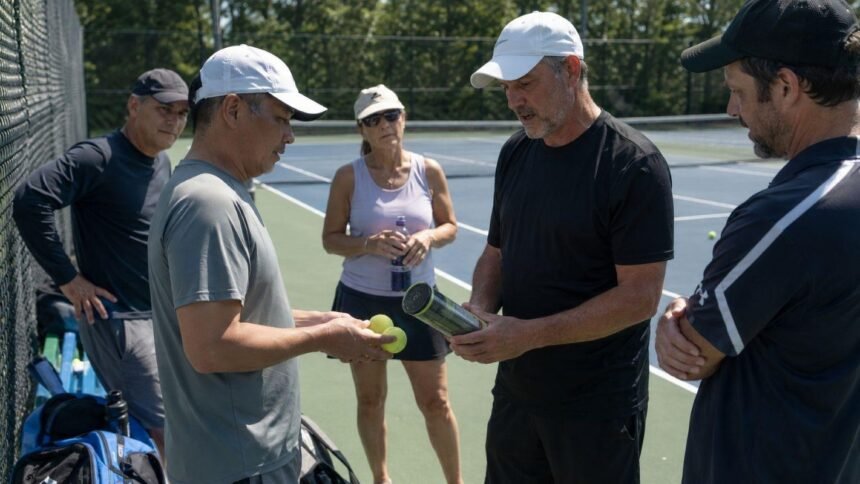
The USTA Adult League system is the largest recreational tennis league in the world. More than 320,000 players across all 50 states compete each season, rated by NTRP level, organized into flights, showing up on Saturday mornings with their racquet bags and their competitive instincts and, often, absolutely no idea what the rules are around the balls.
Not which balls to use. Not whether they’re ITF-approved. The social rules: the unwritten protocols that experienced captains carry in their heads and almost never pass on, because it never occurs to them that nobody else knows.
Here’s what your captain probably never told you.
The Home Team Provides, But What That Means Varies Enormously
The USTA Regulations are clear that the home team is responsible for supplying balls. What they don’t define is what that actually means in practice. New cans? Balls from last Tuesday’s match that are “basically fine”? A single can split between two courts?
Most experienced captains bring at least one fresh can per court. The better ones bring two for singles matches that look like they might run long. Some bring whatever’s sitting in the bag from the previous week.
There’s no formal mechanism to challenge this before play begins. By the time you’ve warmed up for ten minutes on soft, pressureless balls, you’re kind of committed to the match already.
There Are No Rules About Mid-Match Ball Changes
At Wimbledon, new balls arrive after the first seven games, then every nine games after that. The logic accounts for the warmup stretch in the first set: felt wears, pressure drops, and after a few sets the game has quietly changed.
In USTA league play there is no equivalent protocol. One can (three balls) is the standard for a singles match, regardless of whether it runs 45 minutes or two and a half hours. It is entirely possible, and fairly common, to reach a third-set tiebreak on balls that belong in a beginner’s basket drill.
The unwritten rule that experienced captains follow: if a match goes deep into a third set and there’s another can in the bag, open it. Nobody in the history of recreational tennis has ever complained about fresher balls.
“These Balls Are Fine” Is an Argument With No Referee
Without an official on court, ball disputes in league play have no arbiter. If one team thinks the balls are dead and the other team disagrees, the USTA rulebook offers no clear resolution path. There’s no equivalent of the let-cord judge, no neutral party to hand a ball to and say: well?
What actually happens is that the player who feels most entitled to an opinion (usually the most experienced, the loudest, or the one who drove the furthest to get there) wins the argument by attrition. The other player takes a new ball from their pocket, bounces it twice with slightly more force than necessary, and serves.
The practical workaround that captains learn over time: bring more balls than you think you need. The cost of an extra can is substantially less than the social cost of a disputed match, every single time.
Your Car Is Destroying Your Match Balls
This one is quiet but genuinely damaging. In Florida, Texas, Arizona, and across the Southeast, where year-round outdoor league play is the norm, car interior temperatures in summer can exceed 120°F within an hour in direct sun. Tennis balls stored in a trunk or back seat under these conditions lose internal pressure at a measurably accelerated rate.
A captain who buys fresh cans on Monday and stores them in a Phoenix car until Saturday’s match is handing over balls that are functionally older than they look. The can says pressurized. The court says otherwise.
The better approach is to store match balls somewhere temperature-controlled between sessions, and if you’re serious about it, in a pressurized container that keeps them at the correct internal pressure between uses. A ball maintained at its original pressure plays the same way it did on the day it was opened. PressureBall is the most common option for this. Once captains start using one, the trunk-of-the-car method tends to quietly disappear from their routine.
The Visiting Team Can Object. They Just Never Do.
This surprises most players. While the home team provides balls, the USTA Regulations do allow a player to raise concerns about ball quality before play begins. In practice, this almost never happens because the social dynamics are brutal: objecting to someone’s balls before the match starts feels aggressive regardless of whether it’s justified, and recreational tennis is a community where you’ll see these people again.
But it’s worth knowing the option exists. If you’re handed balls that are visibly bald or bounce like they’ve been through a washing machine, you’re not required to simply accept them and play on. A reasonable captain on the other side of the net will understand. An unreasonable one will teach you something useful about who you’re playing against.
A Sealed Can Is Not a Guarantee
This surprises new players the most. An unopened can of tennis balls is not immune to pressure loss: it just loses pressure more slowly than an open one. Cans that have sat in a warehouse, then a shipping container, then a store shelf, then a garage for six months can be meaningfully below peak pressure before they’re ever cracked open.
The satisfying hiss when you pop the seal is the sound of the can equalizing with outside air pressure. It is not a guarantee of quality. Some balls exit the can already softer than they should be, particularly after prolonged heat exposure or extended shelf time.
Recreational players treat “unopened” as a synonym for “good.” It isn’t always.
Mountain State Players Are Often Playing the Wrong Balls
The ITF officially recognizes that tennis balls behave differently at altitude. Above approximately 4,000 feet, standard pressurized balls travel faster, bounce higher, and resist control in ways that feel wrong without an obvious explanation. The ITF has specific ball specifications for high-altitude play, including pressureless balls and slow-speed balls both approved for use above that threshold, and almost no recreational player in Colorado, New Mexico, Utah, or Montana has ever been told this.
USTA Mountain Section matches are routinely played at elevations where altitude balls would be the technically correct choice. Players chalk up the “light” or “fast” feel to the air, or the court, or their own form on the day. The balls are never the suspected culprit.
The Warmup Ball Move That Serious Captains Know
Competitive players who’ve been captaining USTA teams for a long time often bring a separate set of old balls specifically for the pre-match warmup. The logic is straightforward: warming up with your match balls uses them up. Fifteen minutes of baseline hitting before a competitive match puts real felt wear and repetitive impact on balls that then have to last the entire match.
This isn’t in any USTA documentation. It’s tribal knowledge passed between captains who’ve learned the expensive way. The teams that show up with a hopper of beat-up old balls for the warmup and fresh cans for the match are usually the teams that have been doing this for a while.
The Three-Ball System Has a Reason Nobody Explains
Three balls per can, three balls used per match. Recreational players accept this without questioning it. The reason actually matters: three balls allow for efficient rotation during a match, reduce time lost chasing wayward shots, and provide consistent bounce across each set.
Professional matches use six balls per set for similar reasons at higher intensity and pace. The three-ball system in recreational play is a compressed version of the same logic.
When one ball in a three-ball set gets noticeably softer than the other two (which happens, particularly on rough hard court surfaces) play becomes quietly inconsistent without players identifying the cause. Rotating all three balls through every few games, rather than defaulting to the same ball on every second serve, helps more than most players realize. The captains who know this figure it out by accident, usually after a match where every second serve felt inexplicably different.
The Bigger Picture
None of this is secret, exactly. It just never gets taught.
USTA adult leagues are organized around NTRP ratings, scheduling software, court bookings, and the logistics of getting twelve people to the same place at the same time. The gear knowledge (the stuff about balls) gets passed down person to person, captain to captain, in conversations after matches at the clubhouse or in the parking lot.
The players who’ve figured it out tend to have cleaner matches. Their equipment doesn’t become an excuse. Their opponents leave the court with fewer grievances. And their reputation as a captain, in the quiet way these things travel through a tennis community, is just a little better than everyone else’s.
Most of what you need to know about tennis balls in league play fits in a single conversation. Consider this that conversation.