


Fast games don’t just move quicker. They change how people think. Put a player in a tight loop of bet, result, repeat, and suddenly the usual “careful” mindset gets replaced by something more instinctive. Less planning, more reacting. More emotion in the driver’s seat.
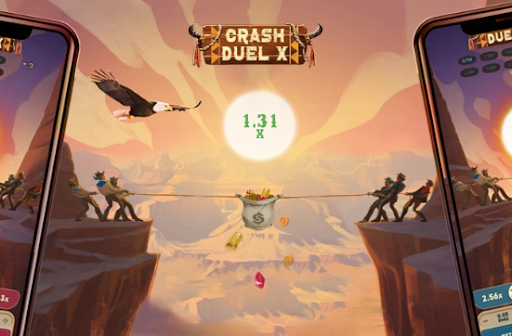
That’s why instant formats like crash duel are such a useful lens for understanding modern gambling behavior. They’re not slow-burning slot sessions. They’re rapid-fire choices, made under pressure, with a reward system that hits fast and often. Sounds fun, right? It is. It’s also a perfect environment for predictable mistakes.
Why Speed Changes Everything
The brain loves short feedback loops
Fast games compress the timeline between action and outcome. In practical terms, that means:
- A win lands immediately.
- A loss stings immediately.
- The “next chance” appears immediately.
This is the same mechanism that makes short-form video addictive. The brain doesn’t have to wait. Waiting is where reflection happens. Speed crowds reflection out.
In slower games, players naturally create pauses. They stand up, check something else, talk, breathe. In instant games, the interface does the opposite. It invites continuation. The session becomes one long chain of small decisions, and small decisions are easier to make carelessly.
Time pressure turns strategy into instinct
Even when a fast game has a genuine decision point, many players don’t treat it like one. Under time pressure, humans tend to pick “good enough” rather than “best.” That’s not laziness, it’s mental economics.
Players commonly rely on:
- gut feeling
- patterns that aren’t real
- rules of thumb that worked once
- what the last round “felt like”
And because outcomes arrive quickly, the player gets instant emotional feedback, which reinforces whatever choice was just made, even if it was irrational.
Common Behavior Patterns in Instant and Quick-Loop Games
1) The cashout problem: regret management in real time
Crash-style mechanics put players in a constant negotiation with regret.
- Cash out early, and the round may soar higher, creating “missed profit” pain.
- Stay in too long, and a sudden crash creates “total loss” pain.
So what happens? Players start playing defense against regret, not maximizing value. Many will cash out based on what would feel least embarrassing, not what makes mathematical sense.
2) Streak-chasing and scoreboard thinking
Fast outcomes create the illusion of momentum. After three quick wins, it feels like a “good run.” After several losses, it feels like something must change soon.
This creates two mental traps:
- Hot-hand belief: “It’s hitting, keep pressing.”
- Gambler’s fallacy: “It’s been cold, it’s due.”
3) Micro-bets and the illusion of control
When rounds are fast, players often lower bet size but increase frequency. It feels safer. It also increases total exposure, because volume sneaks up quietly.
4) “One more round” becomes the default setting
Fast games are built for continuation. The shorter the gap between rounds, the harder it is for players to naturally exit.
Typical fast-game behaviors
- Raising stakes right after a loss
- Copying patterns from recent rounds
- Switching games rapidly after a bad streak
- Playing longer than planned
- Over-trusting lucky rituals
The Design Side: Why Fast Games Pull So Hard
Reduced friction equals reduced self-control opportunities
Fast-game interfaces often include:
- one-tap rebet
- autoplay options
- quick-select stake buttons
- instant deposits
- win celebrations
Sound, animation, and near-miss psychology
Fast games use tight audiovisual feedback: rising tones, countdown tension, sudden drops, bright win flashes. Near-miss effects amplify regret and drive continuation.
The Social Layer: Chat, Streams, and Herd Decisions
People copy what looks confident
If other players cash out at a certain point, many will follow. Big wins posted publicly shift expectations upward.
Highlights distort reality
Streams show wins, not losses. This creates a warped baseline of what “normal” looks like.
How to Play Fast Games Without Getting Played
Practical guardrails
- Set a session timer
- Decide stop-loss and stop-win
- Use fixed staking
- Take breaks
- Avoid autoplay when chasing losses
A simple cashout rule
Pick a consistent cashout target that matches risk tolerance, then stick to it.
What Responsible Fast Gaming Should Look Like
Platforms can help by adding:
- clear reality checks
- easy-to-find limits
- friction for big stake jumps
- transparent rules
Final Take: Speed Reveals the Player, Then Shapes the Player
Fast gaming scenarios don’t invent bias, they expose it. Impulsiveness, pattern-chasing, and emotional staking were always there. Speed makes them louder and more frequent.
For players, the edge comes from structure, not prediction. For platforms, success comes from designing speed with guardrails, not traps.
Because when every round is only seconds away, the real game becomes decision-making itself. And that’s the one most people don’t realize they’re playing.