

Mid-century modern architecture remains one of the most influential styles in residential design. Developed during the middle decades of the twentieth century, it introduced a fresh approach to the relationship between buildings, nature and everyday life. Its emphasis on simple forms, functional layouts, natural materials and generous glazing continues to inspire homeowners and designers today.
Although the style has a recognisable historical identity, it is not limited to retro-inspired interiors or vintage furniture. Its underlying principles can be adapted to create contemporary homes that feel timeless, comfortable and connected to their surroundings.
The Origins of Mid-Century Modern Design
Mid-century modern architecture developed during a period of significant social and technological change. New construction methods, materials and manufacturing techniques allowed designers to experiment with open layouts, large windows and simpler structural forms.
Architects began moving away from heavily decorated buildings towards designs that emphasised function, proportion and the relationship between indoor and outdoor spaces. The result was a distinctive architectural language based on horizontal lines, clean geometry and carefully considered details.
The style became particularly popular in residential architecture, where it offered a modern alternative to traditional house forms. Its influence can still be seen in contemporary homes featuring low-pitched roofs, open living areas and extensive glazing.
Characteristic Architectural Features
One of the defining characteristics of mid-century modern homes is their strong horizontal emphasis. Long rooflines, low profiles and broad windows help buildings appear integrated with the landscape.
Flat roofs and shallow-pitched roofs are common, although the exact form depends on the climate and architectural concept. Large overhangs provide shade and create sheltered outdoor spaces, while exposed structural elements can add visual interest.
Natural materials are equally important. Timber, stone, brick and concrete are often combined to create contrast without relying on excessive decoration. A timber ceiling, for example, can introduce warmth into a home with simple white walls and large glazed openings.
A skilled architektas vilniuje can reinterpret these characteristics for contemporary construction, adapting roof forms, materials and proportions to suit the property and local building requirements.
Bringing Nature into the Architecture
The connection between indoor and outdoor spaces is central to mid-century modern design. Rather than treating the garden as a separate element, the architecture creates visual and physical connections with the surrounding environment.
Large windows frame views of trees, gardens and landscapes. Sliding glass doors open towards terraces, while courtyards and covered patios provide sheltered outdoor areas.
This approach can be particularly effective on wooded or landscaped plots. Existing trees may become part of the architectural composition, with windows positioned to frame selected views.
Experienced architektai consider the building’s orientation, natural features and surrounding views when developing the design. The objective is to make the house feel like a natural part of its setting.
Mid-Century Modern Interior Design
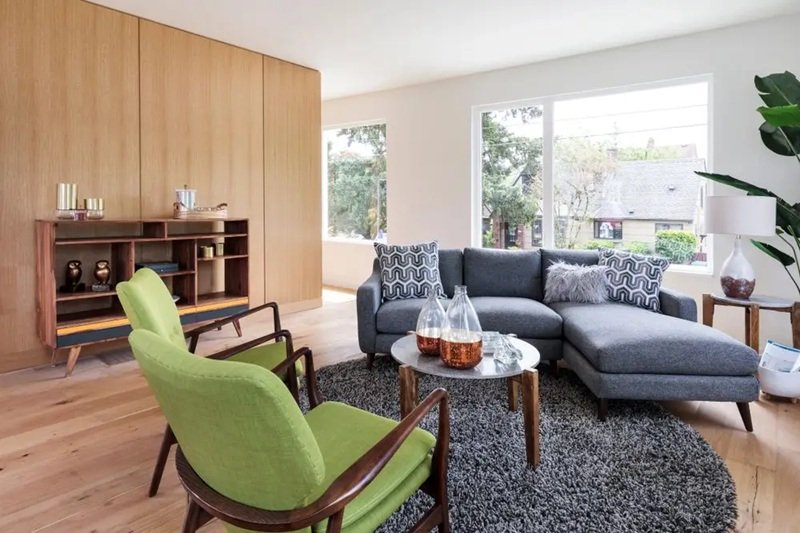
The interior of a mid-century modern home typically follows the same principles as the architecture. Open layouts, natural materials and functional furniture create a relaxed and uncluttered environment.
Timber floors and ceilings are often combined with white or muted walls. Furniture may feature simple geometric shapes, tapered legs and carefully selected upholstery. Rather than filling rooms with decorative objects, the design focuses on a few distinctive pieces.
Colour can introduce character without overwhelming the space. Earthy greens, warm browns, muted oranges and mustard tones are often associated with the style. These colours work particularly well when balanced with natural timber and neutral finishes.
A professional interjero dizaineris can help interpret the style in a contemporary way, combining vintage influences with modern furniture, lighting and materials.
Lighting and Furniture
Lighting is an important part of mid-century modern interiors. Sculptural pendant lights, wall fixtures and floor lamps can become architectural features in their own right.
Rather than relying on a single central light, rooms benefit from several lighting sources that support different activities. Dining areas may use distinctive pendants, while living rooms can combine indirect lighting with floor lamps and wall fixtures.
Furniture should complement the architecture rather than compete with it. Low-profile sofas, wooden cabinets and simple dining tables help maintain the horizontal character of the interior.
The most successful interiors avoid turning the house into a historical reproduction. Instead, they use selected design references to create a contemporary environment.
Adapting the Style to Modern Requirements
Modern homeowners may want the appearance of mid-century architecture while expecting contemporary levels of insulation, energy efficiency and comfort. These requirements can be accommodated without losing the original character of the style.
High-performance windows, improved insulation, efficient heating systems and carefully designed shading can be integrated into the architectural concept. Roof overhangs and orientation remain useful tools for controlling solar exposure.
The interior can also incorporate modern kitchens, bathrooms and storage while maintaining a consistent material palette. Collaboration between interjero dizaineriai and the architectural team helps ensure that contemporary requirements are integrated naturally.
A Style That Continues to Inspire
Mid-century modern architecture remains relevant because its fundamental principles are still valuable. Simple forms, functional planning, natural materials and strong connections with the outdoors are qualities that continue to make residential spaces enjoyable.
Homeowners do not need to reproduce every historical detail. By working with architektai and an experienced interjero dizaineris, they can create a home that captures the spirit of the style while responding to modern lifestyles.